
Father's Day
June 21, 2026
I was a young boy who hated when my father came home.
Not because he was cruel. Because he put me to work.
He was Silent Generation — the generation that built things with their hands without discussing their feelings about it, that understood love as labor, that showed up and did the work and expected you to do the same.
One morning he came outside, handed me a shovel and a tape measure, and said:
“I want a trench eight inches wide, a foot deep, and four feet long. I’m going into town. When I get back, I expect it to be done.”
He left.
I had no idea what I was doing. I failed.
He came back, looked at what I’d dug, and corrected me the way Silent Generation fathers corrected — with a belt, and then with instruction.
Side by side. His hands showing mine. How deep. How wide. How level.
Then he taught me to mix concrete. Lay blocks. Use a trowel.
By the time we were done, I had forgotten entirely about the belt.
We had built a hot seeding bed — a cold frame for starting seedlings before the last frost, before the season was ready for them.
A place to begin things before the world was warm enough to hold them.
We used it for twenty years. Tomatoes. Squash. Herbs. Seedlings transplanted into the garden, given away to neighbors, carried from that one Saturday morning across two decades of springs.
WHY IT MATTERS TO YOU TODAY
Decades later, when I was between jobs, I got work as a stonemason.
I didn’t think I knew how to do it.
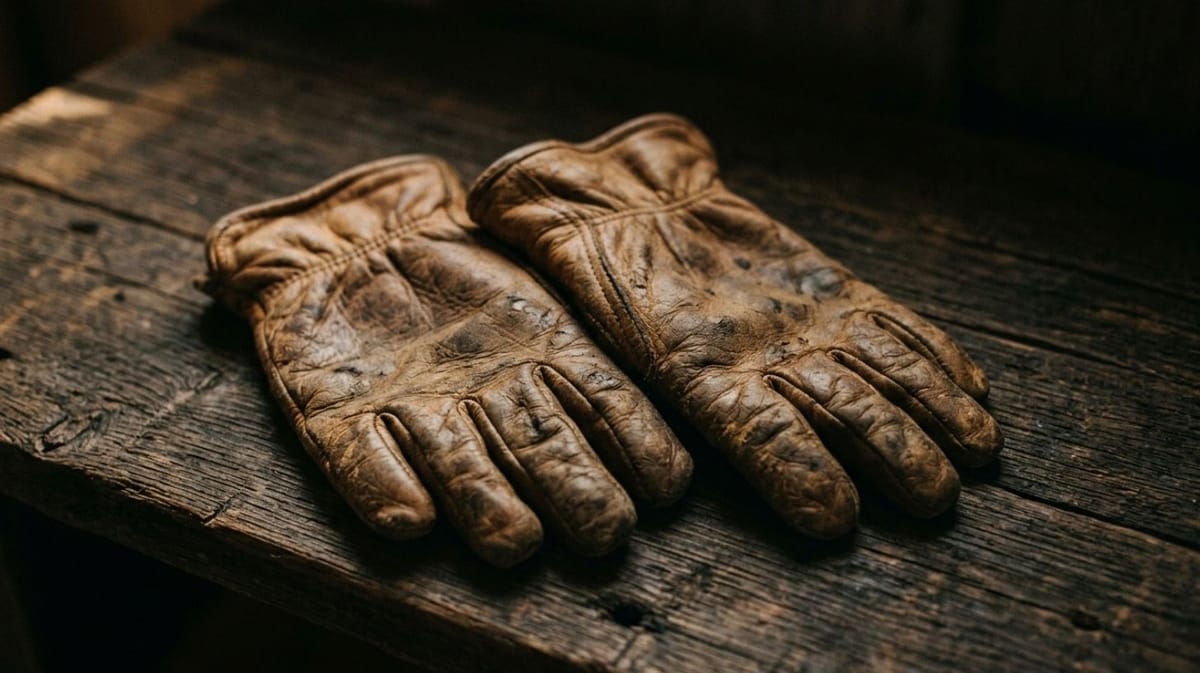
My hands did.
He put something in them on that Saturday morning that waited there, patient and quiet, for thirty years, until I needed it.
That is what fathers at their best actually give you.
Not speeches. Not life lessons delivered at the dinner table. Not wisdom in quotable form.
Skills that live in the hands. Competence that waits.
The knowledge of how to mix concrete, how to set a block level, how to use a trowel — those things don’t live in the mind. They live in the body. They are passed from one pair of hands to another in the doing of the work, not in the explaining of it.
Today is Father’s Day.
If your father gave you something that lives in your hands — a skill, a trade, a way of working, a knowledge of how things are built — today is a good day to use it. Even something small. Even just to feel it there, still present, still waiting.
If your father is gone, the thing he put in your hands is not.
And if your father didn’t give you this — if what he left in your hands was something heavier than skill, something you’re still working out how to carry — then today is also for you.
Because the point of the seeding bed was never the seeding bed.
It was the twenty years of springs that followed. The tomatoes. The squash. The herbs. The seedlings given away.
Whatever your father planted in you, however rough the morning it was planted —
something is still growing.