
Feast of Saint Thomas the Apostle
Touch the Wound Before You Believe
Thomas gets one story in most people’s memory, and it’s not a flattering one.
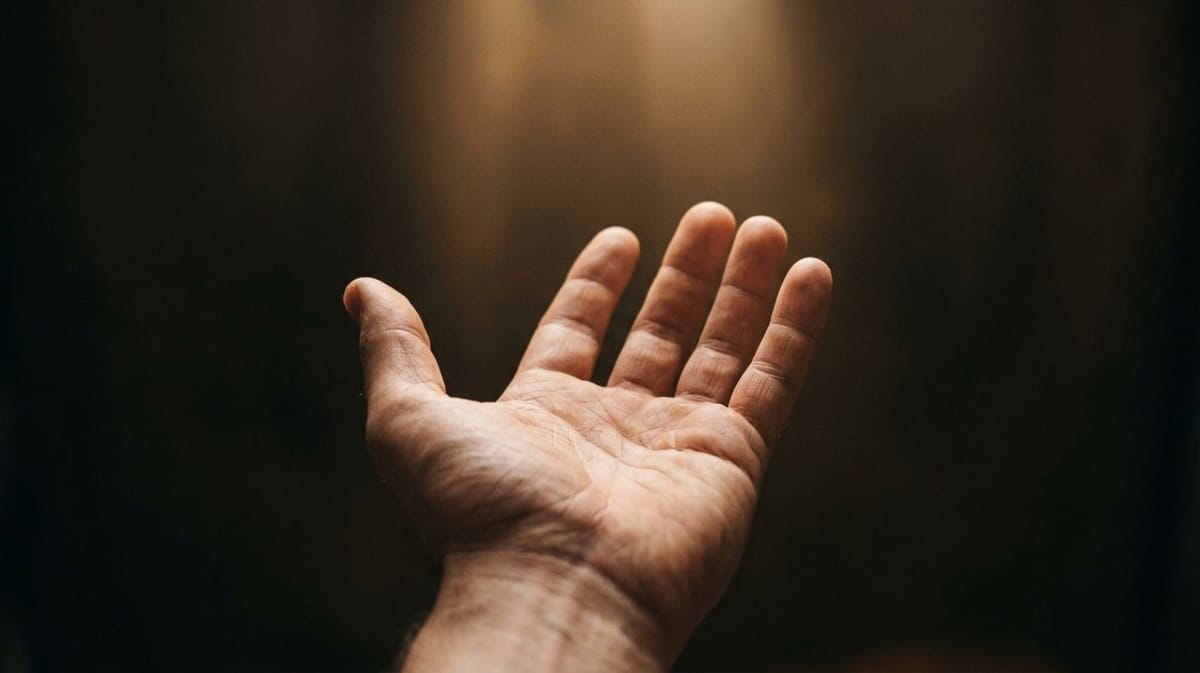
The other disciples told him Jesus had risen. He said: Unless I see the mark of the nails in his hands, and put my finger where the nails were, and put my hand into his side, I will not believe.
A week later, Jesus showed up and let him do exactly that.
History has called him Doubting Thomas ever since, as though refusing to believe an extraordinary claim without evidence were some kind of character flaw rather than the most basic form of intellectual honesty a person can practice.
But here’s what almost nobody says about Thomas: his skepticism wasn’t really about miracles. It was about wounds. He needed to touch the actual mark left by the actual harm before he’d accept what he was being told about it. Not secondhand. Not because everyone else was already convinced. He needed the wound itself.
That is a discipline. And it works in both directions.
I used to believe the worst about Islam.
Not violently. Not with any particular malice. Just the ordinary, absorbed suspicion that comes from being fed a narrative long enough that you stop noticing it’s a narrative at all.
Then I served on a gate at an air base in Safwa, Saudi Arabia, during Ramadan. I was Jewish at the time. My co-guards were Saudi and Egyptian. I learned they weren’t eating lunch because of the fast, and I knew from my own experience with Yom Kippur that fasting near someone who’s eating in front of you is its own particular unkindness.
So I skipped my meals too. Walked a distance away when I needed to smoke, so the smell wouldn’t add to what they were already carrying. I thought I was just being decent. Common sense, honestly — more from my Southern upbringing than anything I’d learned converting to Judaism.
At the end of the day, when they broke the fast, they insisted I join them. An openly Jewish American, holding a rifle at their gate, fed like a king by the very people the narrative back home had told me to distrust.
I never forgot that. It humbled me completely.
Years later, I worked manual labor on a golf course crew — the only white guy on the team, mostly Mexican laborers, some of them decades older than me, working myself to the absolute bone just trying to keep pace. One of my boots had a sole held on with duct tape.
They had a little ceremony. Laughed, gave me a new name — I don’t remember the word, but the meaning was clear: I wasn’t a gringo anymore. I was one of them.
They gave me clothes I needed. New boots. Two boxes of groceries. Men who had less than I did, giving it to me anyway, because I’d shown up and worked alongside them.
I tried not to cry. You will never hear me speak ill of them.
Both times, the narrative I’d been handed didn’t survive contact with the actual wound.
I had been told these were the dangerous ones, the lazy ones, the ones to watch. I put my hand in the actual side of what I’d been told to fear, and found something entirely different than what the story promised.
There are fanatics everywhere. We have them in the church, the synagogue, every organized tradition that has ever existed. But most people — overwhelmingly, almost embarrassingly most people — mean no harm to anyone at all.
I had forgotten that, buried under years of media and narrative and momentum, until I actually touched the wound and found it wasn’t there.
Today, Thomas asks you the same discipline in whichever direction you need it: before you believe the worst about a person, a people, a whole community you’ve never actually met — touch the wound yourself. Go find out.
Innocent until proven guilty isn’t just a legal principle. It is a spiritual practice. And it costs you something — it will cost you the comfort of easy agreement with whatever everyone around you has already decided to believe.
Thomas paid that cost. He stood alone against ten other men who were already convinced. He was right to hold out — not because the resurrection wasn’t true, but because the discipline of needing the actual evidence before you let a claim reorganize your beliefs is the same discipline whether the claim is miraculous or monstrous.
Touch the wound. Then decide.