Hecate's Night
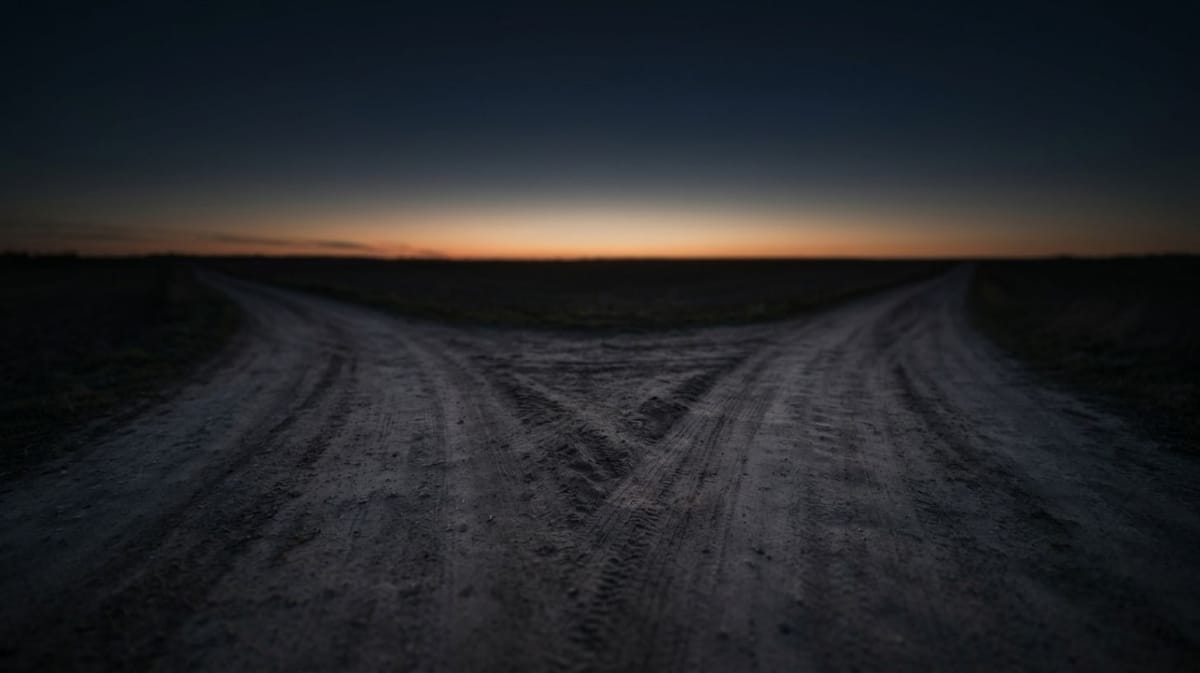
The Fork Before the Choosing
The only real cultural touchstone I have for crossroads, if I’m honest, is Robert Frost.
Most people know the poem as “The Road Less Traveled.” That’s not actually its title. The real title is “The Road Not Taken,” and the poem itself is a lot less certain of itself than its popular reputation suggests.
The speaker stands at a fork in a yellow wood, looks down both paths, and admits the two roads were worn “really about the same.” He doesn’t choose the harder path because it’s obviously better. He just picks one, and then, at the very end, confesses that someday, far in the future, he’ll be telling this story “with a sigh,” as though the meaning of the choice will get assigned later, retroactively, rather than being clear at the moment he actually stood there.
I think that’s a more honest description of most real crossroads than the version people usually quote.
Hecate is the Greek goddess most closely tied to that exact spot. Not the road you eventually chose. The fork itself. The moment before the choosing.
She governs crossroads, thresholds, doorways, the liminal space between one thing and another. In ancient practice, on the dark of the moon, households would prepare what was called a deipnon, a meal or offering, and leave it at an actual crossroads or on the doorstep. Partly an offering to her. Partly, according to some traditions, a way of gathering up whatever bad luck or restless energy had accumulated in the household and carrying it out to the boundary, where it could be released rather than tracked back inside.
She isn’t usually depicted as one figure. Often three, facing three directions at once, able to see down every road simultaneously without having to choose any single one of them first.
WHY IT MATTERS TO YOU TODAY
I think most people want the crossroads to feel more certain than it actually does.
They want a clear sign pointing down the correct path, some obvious marker distinguishing the road less traveled from the road more traveled, some confirmation in the moment itself that they’re choosing correctly.
Frost’s poem, read honestly rather than through its popular misquotation, suggests that’s rarely how it actually works. The roads looked about the same. The choosing happened anyway. And the story about which choice was the brave, right one gets written afterward, looking back, not standing there in the yellow wood trying to decide.
Hecate doesn’t resolve that uncertainty for you. She isn’t the goddess who tells you which road leads somewhere better. She’s the one who stands at the fork itself, holding the discomfort of not knowing, three-faced, watching every direction at once without needing to have already decided.
If you are standing at your own crossroads right now, uncertain which way to go, I don’t think the goddess of crossroads is going to hand you the answer. I think she’s simply confirming that the not-knowing is real, that it’s allowed to be uncomfortable, and that you don’t need to pretend you can already see down the road you haven’t walked yet.
You can leave something at the threshold tonight if you want to. Not to summon certainty. Just to acknowledge that you’re standing somewhere genuinely undecided, and that the discomfort of the fork itself is worth honoring before you take a single step down either path.