
New Moon, Rosh Chodesh Elul
When the Sun Goes Dark Too
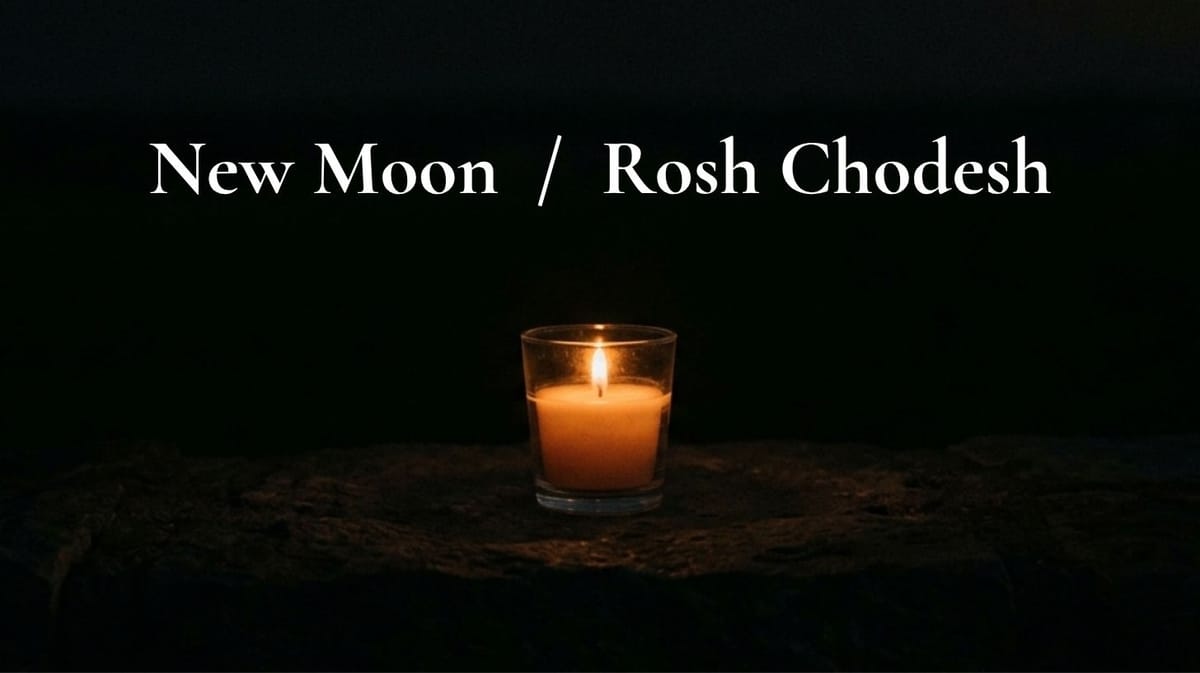
Tonight the moon is new, which means it isn’t really visible at all. Dark sky, no silver crescent, no reflected light to point to.
And on this exact date, for a stretch of the world, the sun itself goes dark too.
A total solar eclipse. By most accounts, the first one visible anywhere on Earth in twenty-eight months. The moon passing directly between the sun and the people standing beneath it, turning day briefly, genuinely, into night.
I’ll say plainly that I’m still learning the details of what this month actually asks of people, so let’s learn it together rather than me pretending to hand you something I’ve fully mastered myself.
Tonight begins Rosh Chodesh Elul. The first day of Elul, the sixth month of the Jewish calendar, and the month that leads directly into the High Holy Days. Rosh Hashanah and Yom Kippur are still weeks away, but Elul is where the actual turning begins. Not the holiday itself. The preparation for it.
WHAT THIS MOON ASKS
Traditionally, throughout Elul, the shofar is blown every morning except on the Sabbath. Not as celebration. As a wake-up call. A sound specifically designed to interrupt the ordinary momentum of an ordinary day and ask a single, simple question: are you paying attention to what actually matters, or are you sleepwalking through it?
There’s a story tied to this month too, about Moses climbing Mount Sinai a second time. The first time, he came down to find the people had already built a golden calf while he was gone, and he broke the original tablets in response. Elul marks the beginning of his second ascent. Forty days, back up the mountain, to receive the commandments again, after the failure, after the golden calf, after everything had already gone wrong once.
He didn’t come down with a fresh start pretending the failure hadn’t happened. He came down carrying the second set of tablets on Yom Kippur, the day this whole preparation is building toward, having gone back up specifically because the first attempt had broken.
There’s also an old tradition connecting the letters of the word Elul itself to a phrase from the Song of Songs: ani l’dodi v’dodi li, which means something like I am my beloved’s, and my beloved is mine. If that’s accurate, and I’m still learning enough to hold it loosely, it reframes the whole month. Not primarily about shame or fear of judgment. About returning to a relationship, the way you’d return to someone you love after time and distance had pulled you apart from them.
And tonight, on the exact night this begins, the sun goes dark on its own, for reasons that have nothing to do with any of this and everything to do with orbital mechanics that were set in motion long before any calendar existed.
But I don’t think it’s wrong to let the coincidence mean something anyway. The brightest, most reliable source of light in the sky, voluntarily obscured for a few minutes, on the exact day a tradition asks an entire people to stop looking outward at the noise of an ordinary life and start looking inward at what actually needs tending before the year turns over.
YOUR PRACTICE TONIGHT
Sit somewhere dark tonight, if you can. Let it actually be dark. No phone light, no lamp.
Name one thing, quietly, that you know needs tending before this year turns over. Not with shame attached to it. Just with honesty. The way you’d finally admit something true to someone you loved, after too long spent avoiding the conversation.
You don’t need the shofar. You don’t need the mountain. You just need the willingness to let the dark be dark for a few minutes, and to actually look at what’s there instead of reaching for the light too quickly.
If you work with crystals, this is the night to set an intention rather than seek illumination. Hold one in the dark, in the quiet, and name what you’re hoping to return to. The full moon, when it comes, will do the charging. Tonight is only for the asking.